The Life of Recep Tayyip Erdoğan
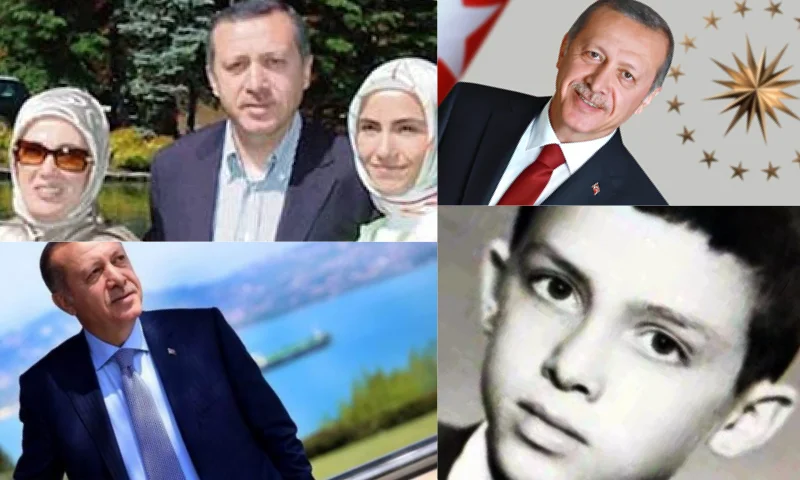
Recep Tayyip Erdoğan was born on February 26, 1954, in the historic Kasımpaşa neighborhood of Beyoğlu district in Istanbul. Erdoğan was the eldest son of a conservative family. The Kasımpaşa neighborhood was known as the capital of tough guys at the time. These two factors were important elements that influenced Erdoğan's character. Tayyip Erdoğan began to be interested in football in his youth. As a successful football player, Erdoğan could have become one of the future football kings. However, his father did not allow him to become a football player. Because Tayyip Erdoğan had a pious character, his friends nicknamed him 'Hoca' (Teacher). Although Erdoğan was interested in the imam-hatip schools, his grade in religion class at school was not particularly good. Because Erdoğan was interested in football, he was employed by the municipality. While working at the municipality, Erdoğan became interested in politics and joined the youth branch of the National Salvation Party in 1976. Thus, he took the first step on the ladder of politics. The National Salvation Party was a right-wing and conservative party chaired by Necmettin Erbakan. The party did not have much support, receiving around 1,000,000 votes, which corresponded to 11% of the vote. However, after the 1980 coup, the secular military administration, uncomfortable with the party's ideas, shut down the party. But with the military gradually withdrawing from governance in 1983, the National View adherents founded the Welfare Party. The closure of the National Salvation Party served as advertising for the Welfare Party, and the party's vote share increased day by day. Recep Tayyip Erdoğan also became the Istanbul Provincial Chairman of the party.
Recep Tayyip Erdoğan's Education and Political Life
As the provincial chairman of the party, Recep Tayyip Erdoğan ran as a candidate in the 1986, 1989, and 1991 elections but was unsuccessful. Erdoğan became more determined with each election he lost. His work ethic also impressed his party colleagues. Tayyip Erdoğan's nickname in the Welfare Party was 'Recep Sultan Mehmet.' Finally, Recep Tayyip Erdoğan managed to win the elections in 1994 and was elected Mayor of Istanbul. Mayor Erdoğan began his initiatives with bans. His first act was to ban alcohol sales in social facilities belonging to the municipality. Although this move was not welcomed by the opposition, it was highly appreciated by the Welfare Party base. Lawsuits were filed against Erdoğan during his tenure as mayor, with allegations of corruption. However, no clear outcome was reached from these lawsuits. Additionally, the 'Ilahi Ordu' poem recited by Tayyip Erdoğan in Siirt was a trump card in the hands of his rivals. The Turkish Penal Code began proceedings against Bey Erdoğan on the grounds that the poem incited hatred and enmity among the public. As a result, Erdoğan was sentenced to 4 months in prison. Furthermore, he was removed from his mayoral position and banned from politics. The reason for Erdoğan receiving such a severe sentence was not solely the poem he recited and the corruption cases. His insult to the prosecutor during the court hearing was also taken into consideration.
Recep Tayyip Erdoğan's Political Life
During Erdoğan's legal process, the Welfare Party was also closed down due to the effects of the February 28 process. Thus, Bey Tayyip was left without a party. Erdoğan considered founding a new party during his time in prison. After being released from prison, Erdoğan joined the Virtue Party, also founded by the National View adherents. Necmettin Erbakan, the leader of the Virtue Party, due to his political ban, handed over his position to Recai Kutan, a traditionalist. This move by Erbakan caused considerable backlash, as the Virtue Party base believed that the new leader should be Tayyip Erdoğan. However, Erbakan remained loyal to tradition and did not go back on his word. This situation led to opposition within the party. The intra-party opposition later formed half of the party. Thus, verbal clashes began between the group, called the 'Innovators,' led by Erdoğan, and the traditionalist group, led by Recai Kutan. Later, Recep Tayyip Erdoğan, Abdullah Gül, and Bülent Arınç decided to leave the party and form a new one. Thus, the Justice and Development Party, centered around these three men, was founded. Necmettin Erbakan interpreted Erdoğan's move as a betrayal of the cause. After its establishment, the Justice and Development Party managed to come to power in its first general election. At this time, Erdoğan's political ban was still in effect. For this reason, Erdoğan applied to the State Security Court and succeeded in lifting his political ban. The AK Party began governing the country in 2002. The 2001 Turkish economic crisis, which occurred a year earlier, would make things difficult. Indeed, after this crisis, Kemal Derviş, who was the Vice President of the World Bank, was appointed as the Minister of Economy at the request of the then-Prime Minister Bülent Ecevit. Derviş's appointment to the ministerial post created a positive atmosphere in the markets. Kemal Derviş, with his unlimited authority, managed to stabilize the state economy. Later, the AK Party, which came to power, did not reject Derviş's reforms and continued to grow the economy in this direction. Another person who contributed to the economic growth was Ali Babacan. Ali Babacan was educated in America, managed companies in Turkey, and became the Minister of Economy at the age of 35. With Ali Babacan's influence, Turkey conducted various negotiations with Europe. As a result of good relations with the EU, the Turkish economy continued to grow with the contribution of excessive foreign capital. Turkey became Europe's fastest-growing country during this period. Later, Turkey rose to the 2nd rank globally in economic growth, after China. However, this economic growth also brought about a high current account deficit. The country had a current account deficit of $65 billion in 2013. The current account deficit, which was -2% in 2002, rose to -8% in 2013. After all these events, Recep Tayyip Erdoğan was elected President in the 2014 elections. In 2017, a referendum was presented to the public. This referendum was for a new system. In the 2017 referendum on the transition to a presidential system, Erdoğan, who received 51% 'yes' votes, was now even more powerful. Winning the presidential elections a year later, Erdoğan and his party still govern our country. In 2018, a foreign exchange crisis began in the country and continues to this day. In 2018, Tayyip Erdoğan appointed his son-in-law, Berat Albayrak, as the Minister of Treasury and Finance. The economy worsened further due to Berat Albayrak's unsuccessful economic moves. With all of this, Recep Tayyip Erdoğan and his party are supported by a large portion of the country's population. The 2023 general elections are what could change the fate of the party, the country, and Erdoğan.