
Things You Need to Know About the Sumerians
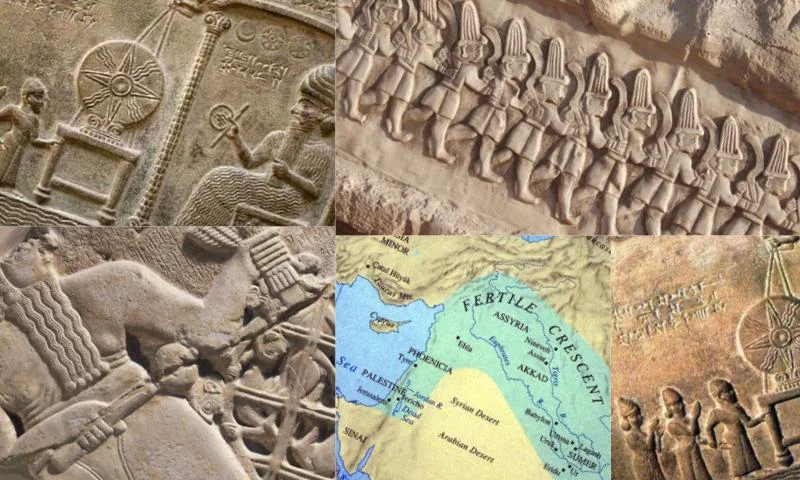
Historians Think One Major Sumerian City Had 80,000 Residents
The origins of the Sumerian civilization in Mesopotamia are still debated today, but archaeological evidence suggests they established roughly a dozen city-states around the fourth millennium B.C. Homes in Sumer were built from packed marsh reeds or mud bricks, and they featured elaborate irrigation canals to harness the silt-laden waters of the Tigris and Euphrates rivers for farming. The primary Sumerian city-states included Eridu, Ur, Nippur, Lagash, and Kish, but one of the oldest and most widespread was Uruk, a successful trading center with six-mile defensive walls and a population of 40,000 to 80,000 residents. By 2800 B.C., the city reached its peak and was likely the largest city in the world at that time.
There Was One Woman Ruler Among the Sumerian Monarchs
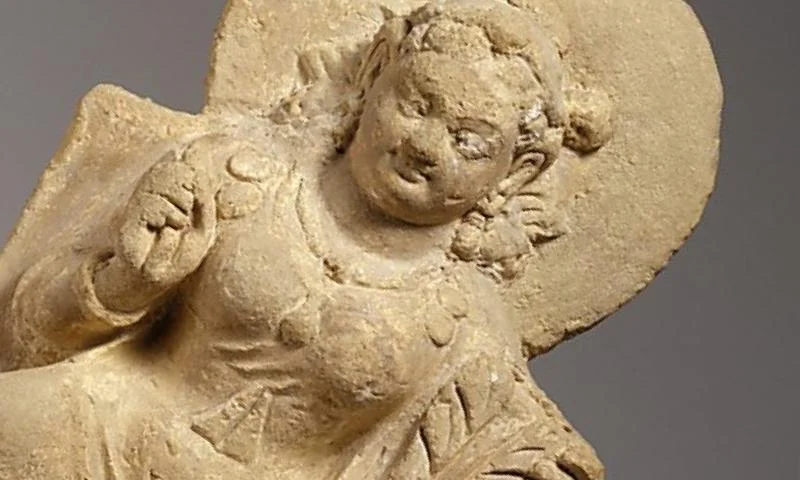
One of the greatest sources of information about ancient Mesopotamia is the "Sumerian King List," a clay tablet that documents the names of most of the ancient Sumerian rulers and how long they reigned. The list is a strange mix of historical fact and myth—one early king is said to have lived for 43,200 years—but it also notes a female ruler, named Kubaba, who supposedly ascended the throne in Sumer. Little is known about Kubaba's reign or how she came to power in the city-state of Kish around 2500 B.C., but the list honors her for "firming up the foundations of Kish" and fathering a dynasty that lasted 100 years.
Sumerian City-States Were Frequently at War With Each Other
Though they shared a common language and cultural traditions, the Sumerian city-states were divided into several different dynasties and kingdoms and were almost constantly at war with each other. The first of these conflicts known to history involves King Eannatum of Lagash, who defeated his rival city-state of Umma in a border dispute around 2450 B.C. To commemorate his victory, Eannatum commissioned the "Vulture Stele," a limestone monument that depicts birds feasting on his enemies' bodies. Under Eannatum, Lagash went on to conquer all of Sumer, but it was just one of several city-states that ruled over Mesopotamia throughout its history. Warfare led to several military advancements—the Sumerians may have invented the phalanx formation and siege warfare—but it also left them vulnerable to invasion by outside powers. In the later stages of their history, they were attacked or conquered by the Elamites, Akkadians, and Gutians.
The Sumerians Were Quite Fond of Beer
In addition to inventing writing, the wheel, the plow, legal codes, and literature, the Sumerians are also remembered as history's original beer makers. Archaeologists have found evidence of beer brewing in Mesopotamia dating back to the fourth millennium B.C. The Sumerians drank beer frequently due to its nutritious content and considered it a key to "a healthy heart and liver." There was even a Sumerian goddess of brewing named Ninkasi, who was celebrated in a famous hymn as "the one who waters the malt lying on the ground."
They Used Cuneiform for Over 3,000 Years
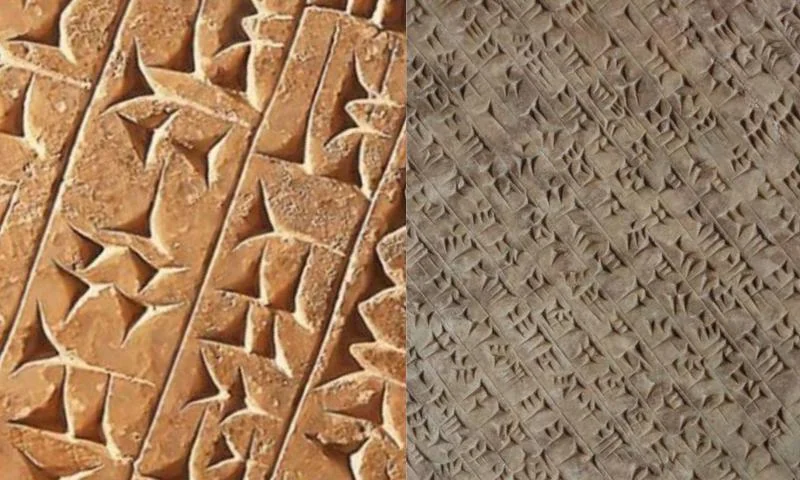
Cuneiform is a Sumerian invention. It is a Latin term that literally means "wedge-shaped" and dates back as far as 3400 B.C. To write the script, scribes would impress wedge-shaped marks onto wet clay tablets, which were then baked hard or left to dry in the sun. The Sumerians appear to have first developed cuneiform to keep accounts and records of commercial transactions, but it eventually evolved into a fully functional writing system used for everything from poetry and history to law and literature. Because the script could be adapted to multiple languages, it was subsequently used by more than a dozen different cultures for several thousand years.
The Sumerians Were Well-Traveled Traders
Because their homeland largely lacked timber, stone, and minerals, the Sumerians had to establish some of history's earliest trade networks, both by land and by sea. Their most important trading partner was the island of Dilmun, which held a monopoly on the copper trade—this may have been modern-day Bahrain. But for cedarwood, they made months-long journeys to places as far-flung as Oman, India, Anatolia, and Lebanon, hoping to obtain gold and precious stones. The Sumerians were particularly fond of lapis lazuli, a blue gemstone used in art and jewelry, and there is evidence they traveled as far as Afghanistan for this stone. Historians have also suggested that Sumerian references to two ancient trading regions known as "Magan" and "Meluhha" might refer to Egypt and Ethiopia.
The Hero of the Epic of Gilgamesh Was Probably a Real Sumerian Historical Figure
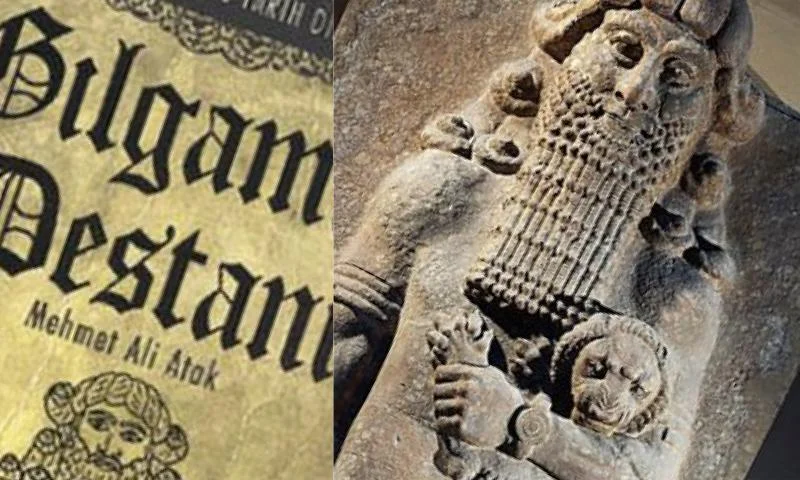
One of the striking achievements of Mesopotamian literature is the "Epic of Gilgamesh," a 3,000-line poem that chronicles the adventures of a Sumerian king who battles a forest creature and searches for the secret to eternal life. Though the poem's hero is a demigod with Herculean strength, most scholars believe he was based on a real king who served as the fifth ruler of the city of Uruk. The historical Gilgamesh appears on the Sumerian "King List" and is thought to have lived sometime around 2700 B.C. Few contemporary accounts of his reign survive today, though archaeologists have found inscriptions suggesting he built Uruk's massive defensive walls and restored a temple.
Sumerian Math and Measurements Are Still Used Today

The 60-minute hour may date back to ancient Mesopotamia. While modern mathematics relies on a decimal system based on the number 10, the Sumerians primarily used a base-60 structure—also known as sexagesimal. This easily divisible number system was later adopted by the ancient Babylonians, who applied these numbers to astronomy, making calculations about the lengths of the moon and the year. The base-60 system eventually fell out of use, but its legacy still lives on in both hour and minute measurements.
Sumerian Culture Was Unknown Until the 19th Century
After Mesopotamia was invaded by the Amorites and Babylonians in the early second millennium B.C., the Sumerians gradually lost their cultural identity and ceased to exist as a political force thereafter. All knowledge of their history, language, and technology—even their names—was eventually forgotten. It wasn't until the 19th century that French and British archaeologists, in the process of searching for evidence of the Neo-Assyrian Empire, stumbled upon Sumerian artifacts, leading to the rediscovery of Sumerian civilization. Scholars like Henry Rawlinson, Edward Hincks, Julius Oppert, and Paul Haupt subsequently led the charge in deciphering the Sumerian language and cuneiform script, allowing historians to recount the long-lost history and literature of early Mesopotamia for the first time. Since then, archaeologists have recovered many pieces of Sumerian art.